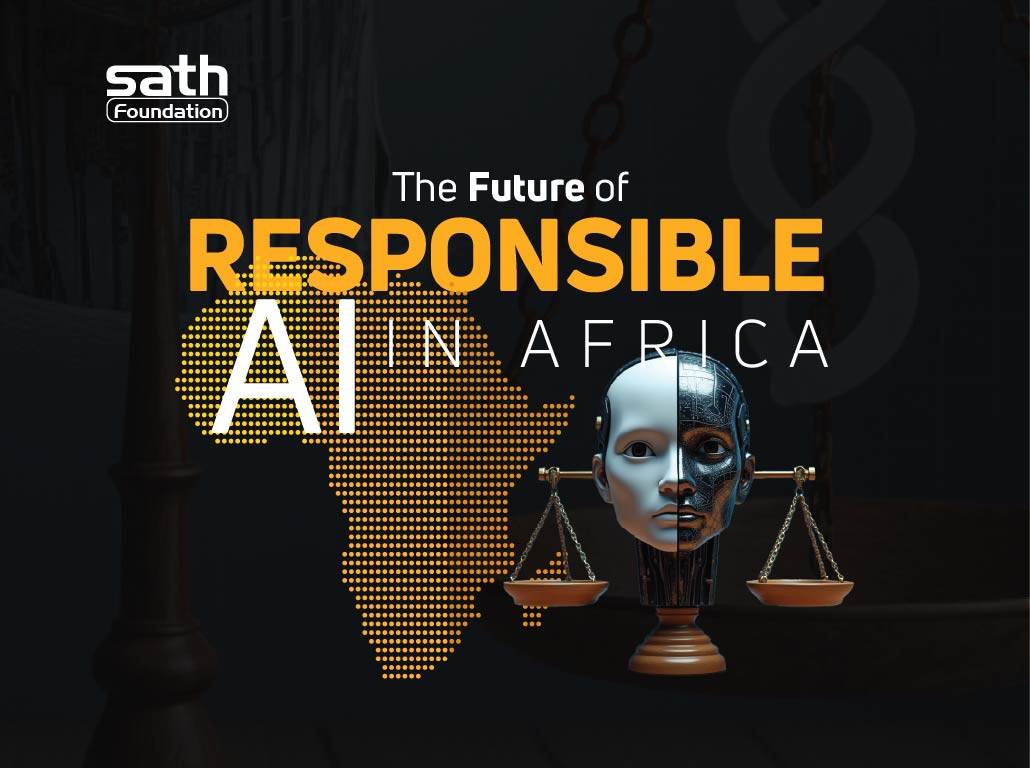
As artificial intelligence adoption accelerates across the continent, Africa’s ability to combine innovation with governance, talent development, and inclusion may determine its long-term success in the global digital economy.
The most important question in African technology right now is not whether the continent will embrace artificial intelligence. That question has already been answered. The more pressing question is whether Africa will engage with AI on its own terms, or simply inherit a technology shaped entirely by other people’s priorities.
That distinction matters more than most conversations about AI in Africa currently acknowledge.
Across the continent, governments are crafting national AI strategies, enterprises are embedding AI into their operations, and a growing generation of developers and entrepreneurs are building solutions for African markets. The energy is real. But energy alone does not determine outcomes. Strategy does. And at the heart of any credible African AI strategy must be a commitment to Responsible AI.
This is not a call for caution. It is a call for intention.
Responsible AI is frequently reduced to a compliance conversation, something organisations address through policy documents and ethics committees. That framing undersells it. At its core, Responsible AI is about ensuring that technology is designed to serve people, that it reflects the values of the communities it operates in, and that its benefits are distributed equitably rather than concentrated among the few. For a continent as diverse, as dynamic, and as underrepresented in global technology development as Africa, that is not a peripheral concern. It is a foundational one.
Many of the AI systems currently shaping global markets were built on datasets, in languages, and for contexts that bear little resemblance to African realities. The risk is not simply that these tools are imperfect fits. The risk is that they quietly reinforce existing inequalities by making decisions that affect African lives without African input. Addressing that gap is where Africa’s most meaningful contribution to global AI development begins.
According to Mastercard’s 2025 report on AI in Africa, the continent’s AI market is projected to grow from USD 4.5 billion in 2025 to USD 16.5 billion by 2030. (Source: Mastercard — https://www.mastercard.com/news/eemea/en/newsroom/press-releases/en/2025-1/august/ai-in-africa-to-top-16-5b-by-2030-mastercard-explores-path-for-continued-digital-transformation/) That trajectory signals serious commercial momentum. But market size is not the same as market leadership. To move from participation to leadership, the continent needs more than investment. It needs the institutional foundations that make sustainable AI development possible.
This is where the gaps become harder to ignore.
According to a UNESCO needs assessment survey across African countries, policy initiatives for AI governance need strengthening, legal and regulatory frameworks for AI need to be fostered, and significantly more investment is needed in AI education, research, and training. (Source: UNESCO — https://www.unesco.org/en/articles/artificial-intelligence-needs-assessment-survey-africa) These are not abstract findings. They describe the actual distance between where African AI ecosystems are today and where they need to be to compete and lead with credibility on the global stage.
Talent sits at the centre of that gap.
According to Tech in Africa, only 3% of the global AI talent pool currently comes from Africa. (Source: Tech in Africa — https://www.techinafrica.com/solving-africas-tech-talent-gap-with-ai-training/) That figure should be read not only as a deficit but as an indicator of unrealised potential. The continent has the population, the youth demographics, and the breadth of real-world challenges that, when combined with the right investment in skills and ecosystems, produce exactly the kind of grounded, problem-solving innovation that the next phase of AI development demands.
But technical skills alone will not close the gap. Africa needs AI practitioners who understand ethics and accountability, researchers who can produce knowledge rooted in African contexts, entrepreneurs who are building for African markets with African insight, and institutional leaders who understand that the governance of technology is as important as the development of it. Responsible AI is ultimately a human discipline before it is a technical one.
The ecosystems that cultivate these qualities matter enormously. Universities, innovation hubs, mentorship networks, and technology communities are not supporting infrastructure. They are the environment in which the next generation of African AI leaders will be formed. Investing in them is not separate from investing in AI. It is the same investment.
At SATH Foundation, this is the work we are committed to. We believe that Africa’s long-term position in the AI economy will be determined not by how quickly the continent adopts the tools others have built, but by the quality of the talent it develops, the strength of the ecosystems it creates, and the seriousness with which it approaches the responsibility that comes with building technology that affects people’s lives.
The continent that gets this right will not simply be a participant in the global AI economy. It will be a standard-bearer for what responsible, inclusive, and human-centred AI development looks like. That is a position worth building towards deliberately, and it may prove to be Africa’s most enduring competitive advantage in the decades ahead.